
Country-Wise Export Compliance for Moringa Powder
The global demand for moringa powder has increased significantly due to its use in nutraceuticals, dietary supplements, functional foods, cosmetics, and pharmaceutical formulations. However, exporting moringa powder is a regulated process that requires strict adherence to quality parameters, technical specifications, safety standards, and international certifications.
This comprehensive guide explains everything required to export moringa powder, helping exporters, bulk buyers, and importers understand export-grade quality expectations.
What Is Export-Grade Moringa Powder?
Export-grade moringa powder refers to moringa leaf powder that complies with international food safety, hygiene, and quality standards. It must be:
- Free from contamination
- Nutritionally consistent
- Microbiologically safe
- Chemically compliant
- Fully traceable with documentation
Depending on its end use, export-quality moringa powder may be classified as food grade, supplement grade, or pharmaceutical grade.
Raw Material Quality Requirements
Export quality begins at the source of moringa leaves.
Moringa Leaf Selection Criteria
- Derived only from Moringa Oleifera
- Harvested at the correct maturity stage
- Free from pests, fungus, and physical damage
- Cultivated under controlled or residue-free farming practices
Many international buyers demand:
- Low pesticide residue or organic cultivation
- Farm-level traceability
- Seasonal harvesting consistency
Poor-quality raw leaves directly affect color, nutrient retention, and export acceptance.
Processing Standards for Export-Quality Moringa Powder
Key Processing Stages
- Washing & Sorting – Removal of soil, dust, and foreign matter
- Low-Temperature Drying – Preserves chlorophyll, nutrients, and natural green color
- Grinding & Sieving – Ensures uniform particle size
- Metal Detection & Quality Control
- Hygienic Packing in Controlled Environment
⚠️ High-temperature drying or open-air processing can degrade nutrients and increase microbial risk, making the product unsuitable for export.
Technical Specifications of Export-Grade Moringa Powder
Typical Export Specifications
| Parameter | Export Requirement |
|---|---|
| Appearance | Fine green powder |
| Odor & Taste | Natural, characteristic |
| Moisture Content | ≤ 7% |
| Particle Size | 80–100 mesh (customizable) |
| Foreign Matter | Absent |
| Shelf Life | 18–24 months |
Specifications may vary depending on buyer requirements and destination country regulations.
Microbiological Quality Standards
Microbial safety is one of the most critical export parameters.
| Test Parameter | Acceptable Limit |
|---|---|
| Total Plate Count | < 100,000 cfu/g |
| Yeast & Mold | < 1,000 cfu/g |
| E. coli | Absent |
| Salmonella | Absent |
| Staphylococcus aureus | Absent |
Non-compliance often results in shipment rejection or import bans.
Chemical & Heavy Metal Limits
Export-grade moringa powder must meet international chemical safety standards.
| Heavy Metal | Maximum Limit (ppm) |
|---|---|
| Lead (Pb) | ≤ 10 |
| Arsenic (As) | ≤ 3 |
| Cadmium (Cd) | ≤ 1 |
| Mercury (Hg) | ≤ 1 |
Additional mandatory testing may include:
- Pesticide residue analysis
- Aflatoxin testing
Nutritional Parameters (Buyer-Requested)
International buyers often request nutritional analysis including:
- Protein content
- Calcium & Iron
- Dietary fiber
- Vitamin A
- Antioxidant profile
All nutritional values must be lab-tested and batch-specific.
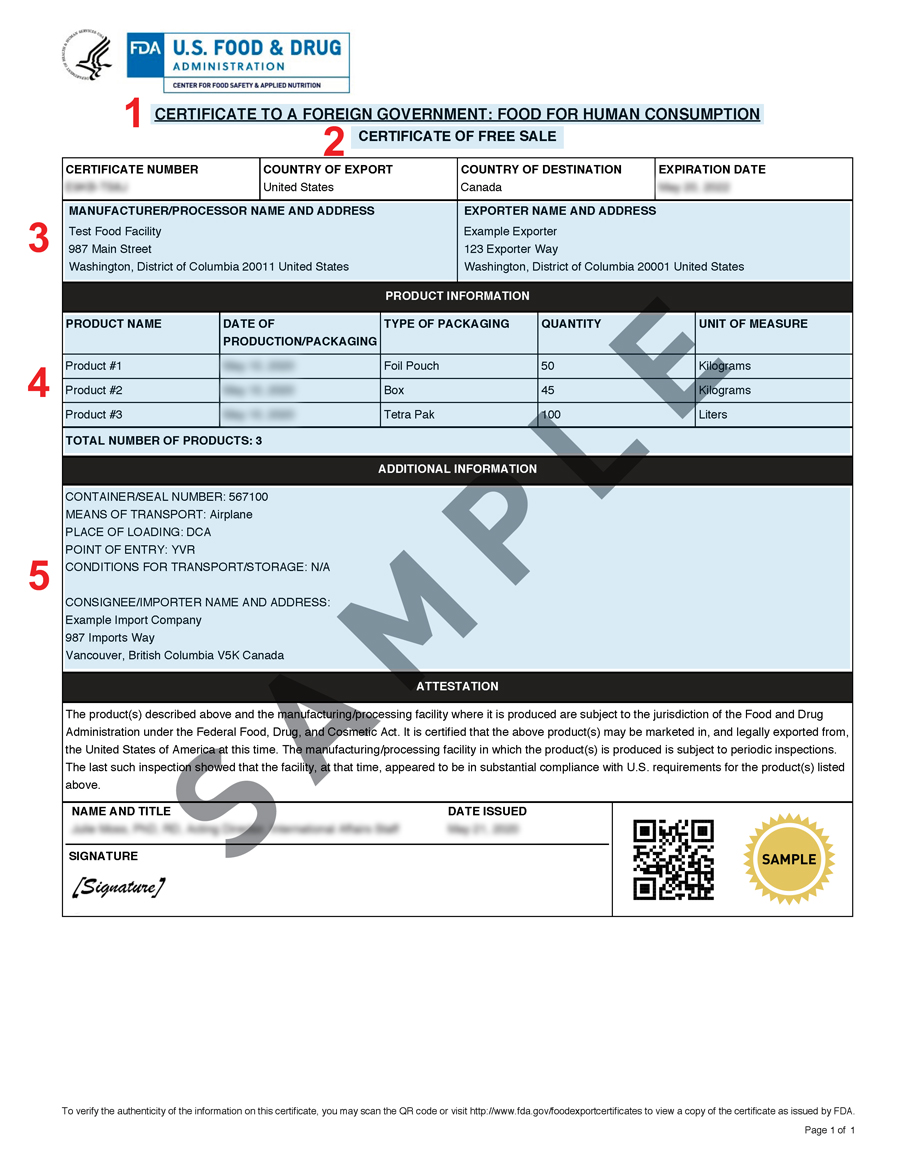
Certifications Required for Moringa Powder Export
Mandatory / Core Certifications
- FSSAI License
- ISO 22000 or HACCP Certification
- GMP (Good Manufacturing Practices)
- Certificate of Analysis (COA)
- Phytosanitary Certificate
Market-Specific Certifications
- FDA Registration – For USA exports
- EU Organic / NOP Organic Certification – For organic markets
- Halal Certification – Middle East & Muslim countries
- Kosher Certification – Select international buyers
Certification requirements depend on destination country regulations.
Packaging Standards for Export
Export packaging must protect moringa powder from moisture, oxygen, and contamination.
Common export packaging includes:
- Food-grade inner liner (HDPE/LDPE)
- Kraft paper bags or fiber drums
- Vacuum packing (on request)
- Proper labeling with batch number, origin, net weight, and expiry
Export Documentation Checklist
- Commercial Invoice
- Packing List
- Certificate of Origin
- Bill of Lading / Airway Bill
- Phytosanitary Certificate
- Certificate of Analysis
- Buyer-specific compliance documents
Incomplete documentation can delay or cancel shipments.
What International Buyers Look For
- Consistent batch quality
- Transparent lab testing
- Full traceability
- Compliance with food safety laws
- Reliable long-term supply
Export buyers value process discipline more than price.
Frequently Asked Questions (FAQs)
What defines export-quality moringa powder?
Export-quality moringa powder meets microbiological, chemical, and physical standards, supported by certifications and lab reports.
Is organic certification mandatory for export?
Not mandatory, but preferred for EU, US, and premium health markets.
What is the shelf life of export-grade moringa powder?
Generally 18 to 24 months, depending on moisture level and packaging.
Can moringa powder be exported for supplements?
Yes, but it must comply with GMP, FDA (for US), and stricter safety norms.
Do standards vary by country?
Yes. Each country has specific import regulations, but HACCP, COA, and phytosanitary certification are commonly required.
Why Choosing the Right Export Partner Matters
Exporting moringa powder is a compliance-driven business. Working with a knowledgeable exporter ensures quality consistency, regulatory adherence, and lower rejection risk, helping build long-term buyer trust.
Looking for Export-Grade Moringa Powder?
Partner with a supplier that understands global quality standards, certifications, and buyer expectations.
👉 Set Up a Free Consultation with Our Team